I Am Sober is a free app that helps you get some control back in your life.
Sober Curious: What It Means and How to Try Drinking Less
Last updated: August 25, 2026Maybe you have started wondering what alcohol is actually doing for you. Not after some rock-bottom moment. Just because the hangovers hit harder than they used to, or the bar tab keeps surprising you, or you noticed you sleep better on the nights you skip it.
That wondering has a name. It is called being sober curious, and plenty of people are doing it. The idea is light: get curious about your relationship with alcohol, try a little less, and notice what changes. No lifelong vow required.
This guide covers what the term means, how it stacks up against going fully sober or doing Dry January, and how to run your own low-pressure experiment.
Short answer: what does sober curious mean?
Sober curious means questioning the role alcohol plays in your life and choosing to drink less, without taking on a permanent sober identity. There is no program to join and no vow to never drink again. You are simply running an experiment. You pay closer attention to when you drink, why you drink, and how you feel afterward. Then you decide what you actually want. Some people cut back. Some take a break. Some end up drinking far less without ever calling themselves sober.
Sober curious vs sober vs Dry January vs cutting back
These get lumped together, but they are different jobs, and none is better than the others. They just suit different goals.
-
Sober curious. An open-ended experiment. You question your drinking and try less, with no fixed rules and no end date. The point is to learn.
-
Cutting back. A specific limit you set and keep, like two drinks max or weekends only. You still drink, on purpose, within bounds you chose.
-
Dry January (or Sober October). A set challenge for a set month. A clear start, a clear finish, a clean reset.
-
Sober. Not drinking, full stop. For some people it is a lifestyle choice. For others it is recovery from alcohol use disorder, which is a different and more serious thing.
You can move between these. Plenty of people start sober curious, try a dry month, and land on a version that fits. Wherever you sit is fine.
See what 280,000+ people reported in their first month without alcohol
This free guide is built from real first-month check-ins by more than 280,000 I Am Sober members quitting or cutting back on alcohol. Select how often and how much you drink to see when hard days, urge moments, restarts, and mood shifts most often showed up for people with similar habits.
Why people try being sober curious
The reasons are usually practical, and they stack up fast. People go sober curious to:
-
Sleep better. Alcohol hurts sleep quality even when it helps you fall asleep (Sleep Foundation). Skip it and mornings often get clearer.
-
Feel less anxious. For a lot of people, less drinking means less of that low-grade next-day dread.
-
Steady their mood. Fewer dips and crashes across the week.
-
Save money. Drinks, rounds, late-night orders, and the Uber home add up. The number can be startling once you see it.
-
Support their health and fitness. Better recovery, easier workouts, one fewer thing working against them.
-
Just find out. Some people simply want to know what changes when alcohol is out of the picture.
How to try a sober-curious experiment
The whole thing works better as a short, defined experiment than as a vague "I'll drink less." Here is a simple way to run one.
-
Pick a window. Seven days is a low-stakes start. Fourteen or thirty gives you a clearer read. Choose one and put an end date on it.
-
Set your rules. Fully alcohol-free? A hard limit on nights out? Weekdays only? Decide now, while it is easy, so you are not negotiating with yourself later.
-
Line up your substitutes. Pick drinks you actually like: a good non-alcoholic beer, a fancy soda, sparkling water with lime. Having something in your hand makes the whole thing easier.
-
Tell one person, if it helps. Not everyone needs an audience. But one friend who knows can take the pressure off in the moment.
-
Track what changes. This is the part that makes it worth doing. Log your sleep, mood, money, and cravings as you go. In I Am Sober, a quick daily review captures all of it in seconds, so by the end you have real proof instead of a vague feeling.
How to drink less without losing your social life
The social part scares people the most, and it is the most manageable. Most of drinking is momentum and habit, not anyone actually watching your glass.
-
Make your first drink a non-alcoholic one. The first drink sets your pace. Start with a soft drink or an NA option and the night tends to follow.
-
Keep a one-line answer ready. "I'm driving," "I'm taking a break," or "I'm good with this one" ends the question fast. You do not owe anyone a bigger explanation.
-
Pick the setting when you can. A dinner, a coffee, a walk, or a show puts the focus on the people, not the bar.
-
Leave before the pressure peaks. The push to keep drinking usually ramps up late. Head out while you are still enjoying it.
Ready to make a change? We've got you!
I Am Sober is a sobriety and habit change app that helps people track their progress, reach new milestones, and build the daily support system they need to keep going.
What to track during the experiment
Tracking is what turns a vague "I think I feel better" into something you can actually see. Keep it simple. A few things to log each day:
-
Sleep. How you slept, and how you felt waking up.
-
Mood and energy. A quick read on both.
-
Cravings. When the urge to drink showed up, and what set it off.
-
Money. What you would have spent, saved up over the window.
-
Social pressure. Which situations were easy, and which were hard.
-
Triggers. The times, people, and feelings that made you want a drink.
By the end of a week or a month, the pattern is right there in front of you. That is far more convincing than anything an article can tell you, including this one.
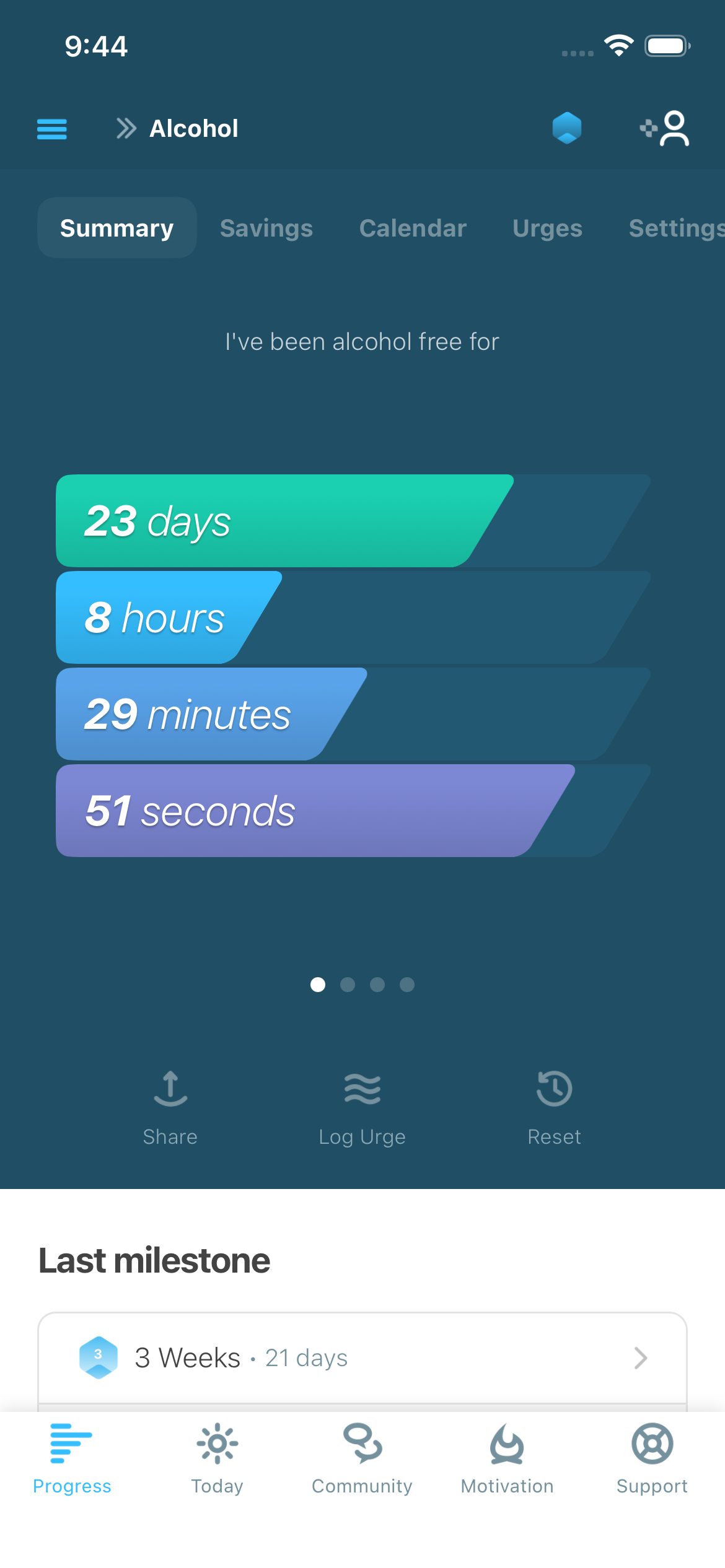
Try a 7-day alcohol-free tracker. In I Am Sober, you set your window, log a craving the second it hits, and watch the days and the money add up. At the end, you have your own proof of what changed. Start a 7-day experiment
When being sober curious may not be enough
For most people, drinking less is a straightforward experiment. For some people, cutting back turns out to be harder than they expected. That can be a sign of something more serious.
Pay attention if:
-
Cutting back feels impossible, even when you really want to.
-
You get shaky, sweaty, nauseous, or anxious when you stop drinking.
-
Drinking keeps causing problems, and you keep doing it anyway.
If any of that sounds familiar, it may point to alcohol dependence rather than a simple habit. That is not a failure, and it is common. Talk to a doctor, especially before quitting, because withdrawal from heavy drinking can be dangerous and is safer with support.
What to do after the experiment
However it goes, you will know more than when you started. Before you decide anything, look back at what you logged. Reviewing your days in I Am Sober pulls your sleep, mood, money, and craving data into one clear picture of whether the experiment worked. Let that guide your next move:
-
Keep going as you are. If drinking less feels good, you can just keep drinking less. No label needed.
-
Adjust the rules. Loosen them, tighten them, or change which days are alcohol-free.
-
Go longer. If a week felt good, a full 30 days will tell you even more.
-
Get more support. If the experiment showed you the habit has a real grip, that is useful information, and there is help for it.
There is no finish line you are supposed to reach. The point was to learn what you actually want, and now you have a better idea.
Frequently asked questions
What does sober curious mean?
Sober curious means questioning the role alcohol plays in your life and choosing to drink less, without committing to permanent sobriety. It is an open-ended experiment in paying attention and drinking with more intention.
Is sober curious the same as being sober?
No. Being sober usually means not drinking at all, sometimes as a lifestyle choice and sometimes as recovery from alcohol use disorder. Sober curious is lighter and open-ended. You explore your relationship with alcohol and often still drink, just less and more deliberately.
Can I be sober curious if I still drink sometimes?
Yes, and that is the whole idea. Sober curious is about intention, not perfection. Drinking less, drinking more mindfully, or taking breaks all count.
How do I start drinking less alcohol?
Pick a short window, set clear rules, line up drinks you enjoy that have no alcohol, and track how you feel as you go. Starting each outing with a non-alcoholic first drink and keeping a simple one-line answer ready for social settings makes it much easier.
What should I track during a sober-curious month?
Sleep, mood, energy, cravings, money saved, social pressure, and your triggers. By the end of the month, those notes show you exactly what changed, which is far more convincing than a general sense that you feel better.
Sources
-
Sleep Foundation. "Alcohol and Sleep." https://www.sleepfoundation.org/nutrition/alcohol-and-sleep
-
Mehta G, Macdonald S, Cronberg A, et al. "Short-term abstinence from alcohol and changes in cardiovascular risk factors, liver function tests and cancer-related growth factors: a prospective observational study." BMJ Open, 2018. https://doi.org/10.1136/bmjopen-2017-020673
For the full, sourced breakdown of what changes when you stop or cut back, see our benefits of not drinking alcohol guide.
I Am Sober is a free app that helps you get some control back in your life.
Relevant articles

30 Days No Alcohol: Timeline, Benefits, and Tracker

Does Non-Alcoholic Beer Have Alcohol? What It Means for Sobriety

Benefits of Not Drinking Alcohol: What Changes When You Stop
Alcohol and Sleep: How It Affects REM, Insomnia and Snoring

Alcohol and Anxiety: Why Drinking Makes Anxiety Worse
Alcohol Sobriety App